ERP Software vs Traditional Business Management: Which Is Better?
Running a business today is more complex than ever. Sales, inventory, accounting, HR, customer relationships, and reporting all need to work together seamlessly. Yet many businesses in Kerala still rely on spreadsheets, paper records, and disconnected software to manage their operations.
So, which is better: ERP software or traditional business management?
The answer depends on your business goals—but for companies looking to grow, improve efficiency, and make smarter decisions, ERP software is the clear winner.
What Is Traditional Business Management?
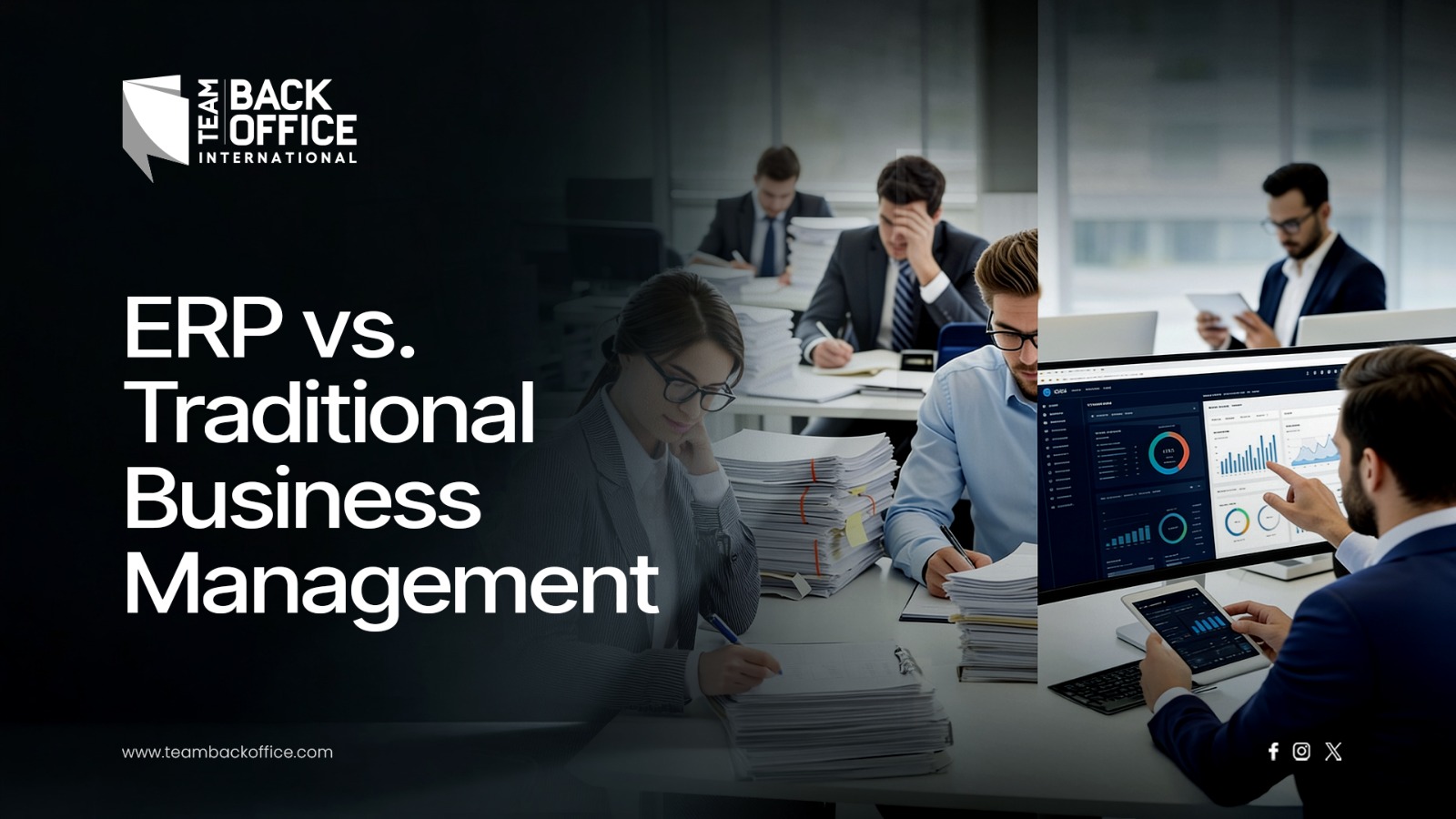
Traditional business management involves handling different business functions separately. This often includes:
- Excel spreadsheets for inventory
- Tally for accounting
- Manual attendance tracking
- Paper invoices
- Multiple software tools that don't communicate with each other
While this approach may work for very small businesses, it becomes difficult to manage as operations expand.
Challenges of Traditional Business Management
Businesses using traditional methods often face:
- Duplicate data entry
- Human errors
- Delayed reporting
- Poor communication between departments
- Difficulty tracking inventory and finances
- Limited visibility into business performance
These challenges can slow down growth and increase operational costs.
What Is ERP Software?
Enterprise Resource Planning (ERP) software is an all-in-one solution that connects every department of your business on a single platform.
Instead of managing separate systems, ERP software integrates:
- Finance and Accounting
- Inventory Management
- Sales and CRM
- Purchasing
- Human Resources
- Payroll
- Manufacturing
- Project Management
- Reports and Analytics
Everything is updated in real time, giving business owners complete visibility into their operations.
ERP Software vs Traditional Business Management
| Feature | Traditional Management | ERP Software |
|---|---|---|
| Data Management | Multiple files and systems | Single centralized database |
| Reporting | Manual and time-consuming | Real-time dashboards |
| Inventory Tracking | Manual updates | Automated tracking |
| Accounting | Separate software | Integrated with all departments |
| Team Collaboration | Limited | Connected workflows |
| Business Growth | Difficult to scale | Easily scalable |
| Decision Making | Based on outdated information | Real-time insights |
Why Businesses Are Switching to ERP Software
1. Better Productivity
Employees spend less time entering data manually and more time focusing on business growth.
2. Reduced Errors
Since information is entered once and shared across departments, duplicate entries and mistakes are significantly reduced.
3. Faster Decision Making
Business owners can instantly access reports on sales, profits, inventory, and expenses without waiting for manual updates.
4. Improved Customer Service
ERP software helps businesses manage customer orders, payments, and support more efficiently, resulting in a better customer experience.
5. Lower Operating Costs
Automation reduces repetitive work, improves resource utilization, and helps businesses save time and money.
Is ERP Worth It for Small Businesses?
Absolutely.
Many business owners assume ERP software is only for large enterprises. In reality, modern ERP solutions like ERPNext are designed for startups, SMEs, wholesalers, retailers, manufacturers, and service businesses.
As your business grows, ERP grows with you, without the need to switch systems later.
Why Choose Team Back Office?
Choosing the right ERP implementation partner is just as important as choosing the software itself.
Team Back Office (TBO) helps businesses streamline operations with complete business management solutions tailored to their needs.
Our Services
- ERPNext Implementation
- ERPNext Customization
- Accounting and Financial Management
- Inventory and Warehouse Management
- CRM and Sales Automation
- HR and Payroll Solutions
- Business Process Automation
- Website Development
- Digital Marketing Services
- Ongoing ERP Support and Training
At Team Back Office, we don't just install software—we help businesses transform the way they operate, making growth simpler, smarter, and more sustainable.
Final Thoughts
Traditional business management methods may have worked in the past, but today's competitive market demands speed, accuracy, and real-time visibility.
An ERP system brings every part of your business together, helping you reduce manual work, improve productivity, and make informed decisions.
If you're still relying on disconnected tools and manual processes, now is the time to explore how ERP software can help your business scale with confidence.
Frequently Asked Questions (FAQs)
1. What is the biggest advantage of ERP software over traditional business management?
ERP software centralizes all business operations into one system, reducing manual work, improving accuracy, and providing real-time insights.
2. Is ERP software suitable for small businesses?
Yes. Modern ERP solutions like ERPNext are affordable, scalable, and designed for small and medium-sized businesses as well as large enterprises.
3. Can ERP software replace accounting software like Tally?
Yes. ERP software includes integrated accounting while also managing inventory, HR, CRM, sales, purchasing, and other business functions from a single platform.
4. How long does ERP implementation take?
The timeline depends on the size and complexity of your business. Small businesses can often be up and running within a few weeks, while larger implementations may take longer.
5. Why should I choose Team Back Office for ERP implementation?
Team Back Office provides end-to-end ERPNext implementation, customization, training, support, website development, and digital marketing services—helping businesses manage operations and grow through a single trusted partner.