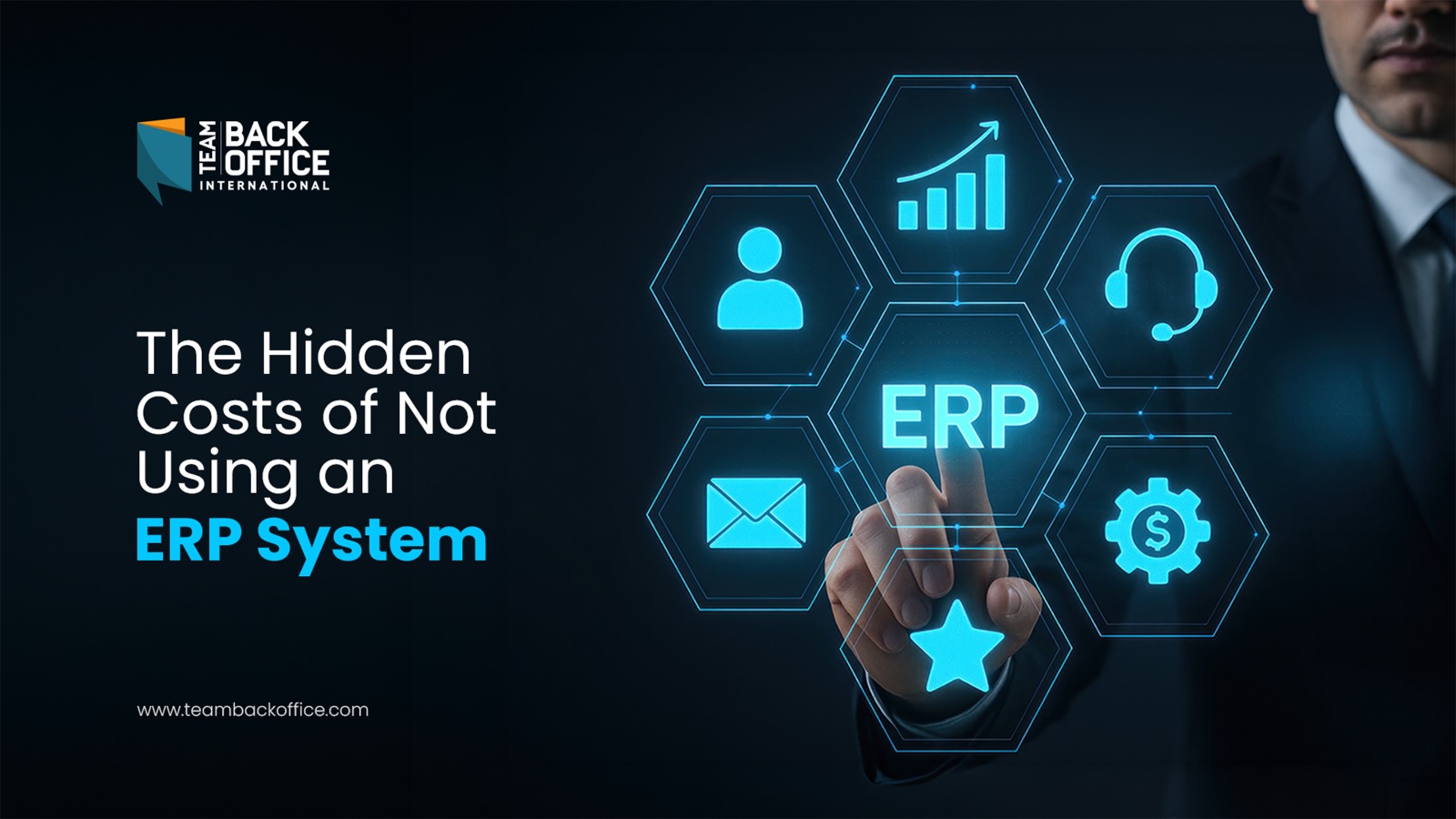
The Hidden Costs of Not Using an ERP System
Running a business without an ERP system may seem manageable in the beginning. Many businesses rely on spreadsheets, multiple software tools, and manual processes to handle daily operations. While this approach may appear cost-effective, the hidden costs can quickly add up impacting productivity, profitability, and business growth.
If your team spends more time managing data than making decisions, it may be time to rethink your business operations.
What Is an ERP System?
An Enterprise Resource Planning (ERP) system is a centralized software solution that integrates key business functions such as accounting, inventory, sales, purchasing, human resources, customer management, and reporting into one platform.
The Hidden Costs of Not Using an ERP System
1. Time Lost on Manual Processes
Manual data entry, spreadsheets, and repetitive administrative tasks consume valuable working hours.
Employees often duplicate information across different systems, increasing workload and reducing productivity.
Hidden Cost: Higher labour costs, reduced efficiency, and slower business operations.
2. Costly Human Errors
Manual workflows increase the risk of mistakes in invoices, inventory records, payroll, and financial reporting.
Even small errors can lead to customer dissatisfaction, compliance issues, or financial losses.
3. Poor Decision-Making Due to Outdated Information
Without centralized business data, managers often rely on outdated spreadsheets or incomplete reports. This makes it difficult to respond quickly to market changes.
ERP software provides real-time reporting and analytics, allowing business owners to make informed decisions with confidence.
Hidden Cost: Missed opportunities and slower business growth.
4. Inventory Management Problems
Businesses without ERP frequently experience stock shortages, overstocking, and inaccurate inventory records.
These issues result in delayed deliveries, unnecessary storage costs, and unhappy customers.
With ERP, inventory levels are automatically updated, helping businesses maintain the right stock at the right time.
Hidden Cost: Lost sales and excess inventory expenses.
5. Increased Operational Costs
Using separate software for accounting, CRM, inventory, payroll, and reporting often means paying for multiple subscriptions while still dealing with disconnected data.
An integrated ERP solution consolidates business operations into one platform, reducing software costs and improving workflow efficiency.
Hidden Cost: Higher software expenses and inefficient operations.
6. Compliance and Financial Risks
Managing taxes, financial records, and regulatory compliance manually can become overwhelming as a business grows.
Missing deadlines or maintaining inaccurate records may lead to penalties and unnecessary stress.
ERP software helps businesses maintain organized financial records and supports compliance with statutory requirements.
Hidden Cost: Penalties, audits, and financial uncertainty.
7. Limited Business Scalability
As businesses expand, manual systems become increasingly difficult to manage. Hiring more employees to handle administrative work is not always the best solution.
An ERP system grows alongside your business by automating workflows and supporting larger volumes of transactions without increasing operational complexity.
Hidden Cost: Slower growth and rising administrative expenses.
How ERP Helps Businesses Save Money
- Automate repetitive tasks
- Reduce manual errors
- Improve team productivity
- Manage inventory efficiently
- Access real-time business insights
- Strengthen financial control
- Enhance customer satisfaction
- Scale operations with confidence
Why Choose Team Back Office (TBO360)?
At Team Back Office (TBO360), we understand that every business has unique operational challenges.
That's why we provide more than just ERP software—we offer a complete business management ecosystem designed to simplify your day-to-day operations.
Our services include:
- ERP Implementation tailored to your business processes
- Secure Data Migration
- Accounting and Bookkeeping Services
- GST, Tax, and Compliance Support
- Website Development
- Digital Marketing Services
- Ongoing Technical Support and Business Consultation
With TBO360, businesses no longer need to coordinate multiple vendors for different services.
Everything is managed under one trusted partner, allowing you to focus on growing your business while we take care of the backend.
Conclusion
The biggest cost of not using an ERP system isn't the software you haven't purchased—it's the productivity you've lost, the errors you've made, and the opportunities you've missed.
Businesses that invest in the right ERP solution gain greater visibility, improved efficiency, better financial control, and the ability to scale with confidence.
If you're looking for a smarter way to manage your operations, Team Back Office (TBO360) offers the expertise, technology, and support to help your business succeed.
Frequently Asked Questions (FAQs)
1. What is the biggest benefit of using an ERP system?
The biggest benefit is centralized business management. ERP software integrates multiple departments into one system, improving efficiency, reducing errors, and providing real-time insights.
2. Is ERP suitable for small businesses?
Yes. Modern ERP solutions are designed for businesses of all sizes and help small businesses automate processes, improve productivity, and prepare for future growth.
3. How does ERP reduce operational costs?
ERP reduces costs by automating manual tasks, minimizing errors, optimizing inventory, improving resource utilization, and replacing multiple software applications with one integrated platform.
4. Can Team Back Office migrate my existing business data?
Yes. Team Back Office (TBO360) provides secure data migration, ensuring your existing business records are transferred safely and accurately into your new ERP system.
5. Does Team Back Office offer services beyond ERP?
Absolutely. In addition to ERP implementation, Team Back Office provides accounting services, compliance support, website development, digital marketing, and ongoing business support, making it a comprehensive partner for business growth.